Archive for the social science Category

Sheehan to Speak at 2015 Middle East Dialogue

Posted in 9-11, afghanistan, analysis, arak, ashraf, baghdad, bioterrorism, chemical weapons, CIA, congress, counterterrorism, data, databases, democracy, digest of middle east studies, dissident, DOMES, education, evidence-based, foreign policy, foreign policy analysis, fundamentalism, global, homicidality scale, IAEA, intelligence, international relations, international security studies, international studies association, iran, iraq, irgc, ISA, ISIS, kerry, killing, media, MEK, MI6, middle east, middle east dialogue, murder, NCRI, New Orleans, nuclear, P5+1, paris, peace, PMOI, policy, policy studies organization, politics, protest, regime change, regime change from within, research, rouhani, sanctions, scholarly, sectarian conflict, security studies, senate, senate foreign relations committee, sheehan, shiite, social science, state department, strike, suicide terrorism, sunni, syria, teaching, tehran, terror tagging, terrorism, threat, u.s. foundation for liberty, unrest, war, weapons, westphalia press, white house with tags , , , , , , on November 17, 2014 by Professor Sheehan

#Media / #News / #Scholarship / #Inquiries / #UBPolicy Studies Organization

Dr. Ivan Sascha Sheehan has been invited to speak at the 2015 Middle East Dialogue, a conference hosted by the Policy Studies Organization on February 26, 2015. The annual meeting — held at the historic Whittemore House in Washington, D.C. — attracts academics, analysts, and government officials with an interest in policy issues impacting the Middle East.

Dr. Sheehan’s presentation – “Suicide Terrorism: Competing Explanations and Policy Implications for the Middle East” – will feature the results of his forthcoming study in a special issue of the journal Clinical Innovations in Neuroscience (“Suicide Terrorism: A Critical Assessment of the Evidence”). The presentation will challenge the conventional thinking on suicide terrorism in the Political Science and International Relations literatures by examining the theoretical and empirical evidence for and against the possibility that suicide terrorists may suffer from psychopathology.

This is Dr. Sheehan’s third time presenting at the Middle East Dialogue (2013, 2014, 2015). He has also twice published in the peer-reviewed journal Digest of Middle East Studies (2013, 2014) and also in a Policy Studies Organization edited volume (2014).

In February 2015, Dr. Sheehan is also scheduled to speak at the Annual Meeting of the International Studies Association in New Orleans where he will discuss his latest study on regime change in Iran, as well as serve as a chair and discussant for other panels related to his scholarship.

Stay tuned for updates and follow Dr. Sheehan on Twitter @ProfSheehan

 #About / #News / #Scholarship /

SHEEHAN: What Is “Regime Change From Within?” Unpacking the Concept in the Context of Iran | Digest of Middle East Studies | Oct 14

Posted in analysis, arak, ashraf, assad, baghdad, ballistic missiles, camp liberty, CIA, civil unrest, clinton, college of public affairs, congress, council on foreign relations, counterterrorism, covert, crimes against humanity, data, debate, delisting, democracy, deterrence, digest of middle east studies, diplomacy, dissident, DOMES, education, european union, evidence-based, farsi, fordow, foreign policy, foreign policy analysis, framing, freedom, fundamentalism, geneva, global, haider al-abadi, hostages, human rights, human security, IAEA, intelligence, international relations, international security studies, international studies association, iran, iran policy committee, iraq, irgc, ISA, ISIS, israel, kerry, kurd, maliki, media, MEK, MI6, middle east, middle east dialogue, military, mossad, natanz, NCRI, negotiation, netanyahu, nuclear, obama, P5+1, paris, PMOI, policy, policy studies organization, politics, preemptive, prof. ali ansari, prof. raymond tanter, protest, qum, quoted, rajavi, regime change, regime change from within, research, rouhani, sanctions, scholarly, sectarian conflict, security studies, senate, senate foreign relations committee, sheehan, shiite, social science, state department, strike, sunni, syria, tanter, tehran, terror tagging, terrorism, the hill, think-tank, threat, turkey, u.s. foundation for liberty, university of baltimore, unrest, war, weapons, white house, wocmes, zarif with tags , , , , , , , , , , , on October 29, 2014 by Professor Sheehan

#Media / #News / #Scholarship / #Inquiries / #UB

SHEEHAN: What Is “Regime Change From Within?” Unpacking the Concept in the Context of Iran | Digest of Middle East Studies | Fall 2014 | Vol. 23, Issue 2

Digest of Middle East Studies (DOMES); Copyright © Wiley / Policy Studies Organization; Fall 2014; Vol. 23, Issue 2; Pgs. 385-403

Dr. Ivan Sascha Sheehan is published in the fall 2014 issue of the Digest of Middle East Studies, a peer-reviewed journal published by Wiley-Blackwell on behalf of the Policy Studies Organization. Dr. Sheehan’s latest study — What Is “Regime Change From Within?” Unpacking the Concept in the Context of Iran — clarifies the contested concept of regime change from within via Tehran’s organized opposition and makes contributions to the concept’s formation to increase its policy relevance and classificatory significance.

Abstract: The use of the phrase “regime change from within” has surged in recent years in media, policy, and opposition discourse, especially in relation to the Islamic Republic of Iran. But what does “regime change from within” actually mean? Is it just a script to encourage the aspirations of a people, or can it be defined with more specificity? This article argues that to be of value as a concept and the basis for articulate policy, “regime change from within” needs to be better defined. To bring greater clarity to the term, the article tries to unpack the concept by disaggregating it into three analytically separable problem components: the “regime,” “change,” and “from within.” Drawing on the case of Iran, I argue that although most of the current debate around the concept is on the “from within” component, the definitional choices that need more discussion are the “regime” and “change” aspects of the phrase.

Excerpt | What Is “Regime Change From Within?” Unpacking the Concept in the Context of Iran | Digest of Middle East Studies | F.14 | Vol. 23, Issue 2 –

[The concept of] ‘regime change from within’ has been employed for an array of very disparate processes — as a holder for democracy promotion efforts from outside a country as well as indigenous efforts that exclude outside intervention, to highlight the need for radical change and more vaguely to call for continuous reform. But to be of value as a concept and the basis for articulate policy, a term needs to have some degree of specificity of meaning, some shared consensus. Otherwise, it just becomes a proverbial “you know it when you see it” concept that is difficult to distinguish from other types of political phenomena.

To address this gap and bring greater clarity to the concept, this article looks at some of the definitional choices that need to be addressed to come to a consensus on the meaning of “regime change from within.” Using the case of the Islamic Republic of Iran, I show how different decisions about what constitutes “regime change from within” could lead to very different conceptualizations in empirical cases…

 #About / #News / #Scholarship /

Sheehan to Speak at International Studies Association Conferences in 2014 & 2015

Posted in afghanistan, analysis, arak, ashraf, assad, baghdad, ballistic missiles, bioterrorism, camp liberty, chemical weapons, CIA, civil unrest, clinton, college of public affairs, counterterrorism, covert, crimes against humanity, debate, delisting, democracy, deterrence, digest of middle east studies, diplomacy, dissident, DOMES, education, european union, evidence-based, fordow, foreign policy, foreign policy analysis, freedom, fundamentalism, global, haider al-abadi, hostages, human rights, human security, IAEA, intelligence, international relations, international security studies, international studies association, iran, iraq, ISA, ISIS, israel, kerry, kurd, maliki, media, MEK, MI6, middle east, military, mossad, mousavi, natanz, NCRI, negotiation, New Orleans, nuclear, obama, P5+1, paris, PMOI, policy, politics, preemptive, protest, rajavi, regime change, research, rouhani, sanctions, scholarly, sectarian conflict, security studies, sheehan, shiite, social science, state department, strike, sunni, syria, tanter, teaching, tehran, terror tagging, terrorism, threat, turkey, u.s. foundation for liberty, university of baltimore, unrest, war, warships, weapons, white house, zarif with tags , , on September 20, 2014 by Professor Sheehan

#Media / #News / #Scholarship / #Inquiries / #UB

Dr. Ivan Sascha Sheehan has been invited to speak at several international meetings organized by the International Studies Association in 2014 and 2015. In addition to delivering papers, Dr. Sheehan has also been asked to serve as a chair and discussant for panels on a range of topics related to his research. Panel I / Panel II / Panel III

2015 International Studies Association 56th Annual Convention
Global IR & Regional Worlds: A New Agenda for Int’l Studies
New Orleans, Louisiana / #PDF
February 18th – 21st, 2015

  • International Studies Association’s 56th Annual Convention, Global IR and Regional Worlds: A New Agenda for International Studies. “What is “Regime Change from Within?” Unpacking the Concept in the Context of Iran.” At Panel on “Vying for regional supremacy in the Middle East: Iran, Saudi Arabia and Turkey,” New Orleans, Louisiana. February 18-21, 2015.
  • Chair, International Studies Association’s 56th Annual Convention, Global IR and Regional Worlds: A New Agenda for International Studies. At Panel on “Networks, violence and non-state actors,” New Orleans, Louisiana. February 18-21, 2015.
  • Discussant, International Studies Association’s 56th Annual Convention, Global IR and Regional Worlds: A New Agenda for International Studies. At Panel on “Effective Counterterrorism Strategies: Causes, Connections, and Innovations,” New Orleans, Louisiana. February 18-21, 2015.

2014 International Studies Association Northeast Annual Conference
Concept & Conceptualization in International Relations
Baltimore, Maryland / #PDF
November 7th – 8th, 2014

  • International Studies Association (Northeast Regional Meeting), At Panel on Conflict and Healing. “Untangling the Concept of Regime Change from Within,” Baltimore, MD, November 7-8, 2014.
  • Chair/ Discussant, International Studies Association (Northeast Regional Meeting), At Panel on Terrorism, September 15, 2014, Baltimore, MD, November 7-8, 2014.

Stay tuned for additional details as they become available.

 #About / #News / #Scholarship /

Sheehan Presenting at 2014 World Congress of Middle Eastern Studies

Posted in analysis, ankara, arak, ashraf, assad, baghdad, ballistic missiles, brussels, chemical weapons, CIA, clinton, college of public affairs, conflict resolution, congress, courses, covert, crimes against humanity, debate, delisting, democracy, digest of middle east studies, diplomacy, dissident, DOMES, education, european union, evidence-based, fordow, foreign policy, foreign policy analysis, global, hostages, human rights, human security, IAEA, intelligence, international relations, international security studies, iran, iraq, kerry, maliki, media, MEK, metu, MI6, middle east, middle east dialogue, military, mossad, natanz, NCRI, negotiation, nuclear, obama, P5+1, paris, PMOI, policy, policy studies organization, politics, protest, qum, rajavi, regime change, research, rhetoric, sanctions, scholarly, security studies, sheehan, social science, state department, syria, tanter, tehran, terror tagging, terrorism, threat, turkey, united kingdom, university of baltimore, unrest, war, weapons, wocmes, zarif on June 19, 2014 by Professor Sheehan

#Media / #News / #Scholarship / #Inquiries

2014 World Congress of Middle East Studies / Strategies for Change in the Middle East: Clarifying the Contested Concept of Regime Change from Within / Panel on Democracy and Reform in Iran from a Historical Perspective / August 18-22, 2014 / Middle East Technical University (METU)

Dr. Ivan Sascha Sheehan has been invited to Ankara, Turkey to present at the 2014 World Congress of Middle East Studies (WOCMES) between August 18-22, 2014. The symposium will be held at Middle East Technical University (METU), one of Turkey’s leading universities. Dr. Sheehan is scheduled to present a paper titled Strategies for Change in the Middle East: Clarifying the Contested Concept of Regime Change from Within.

Presentation Abstract: The term “regime change from within” has become increasingly popular in opposition and policy discourse, especially in relation to the Islamic Republic of Iran. It has also begun entering the academic literature. But what does it mean? Despite its increasing use “regime change from within” is rarely defined and scant scholarly attention to date has been paid to defining it. This is problematic since, as an “umbrella concept,” the term can be stretched to include a wide variety of discrepant processes. In fact, “regime change from within” has been used as a holder for democracy promotion efforts within a country that start both inside and outside a country, as well as indigenous efforts that exclude outside support, to highlight the need for radical change, and more vaguely to call for “continuous” change or reform. This paper argues that coherent strategic policy demands better articulation of the meaning of the term. As a first step, the paper traces the evolution of use of the term “regime change from within,” tries to unpack its components, and develops a preliminary framework that partitions the concept into ends (vision) and means (strategy) to assess its utility for policy.

Stay tuned for two forthcoming articles by Dr. Sheehan:

SHEEHAN: What is “Regime Change from Within?” Unpacking the Concept in the Context of Iran | Digest of Middle East Studies | Fall 2014

SHEEHAN: Balancing Ends, Ways, and Means: The Case for Reviving Support for “Regime Change from Within” in Iran | Under Review

More on Dr. Sheehan’s research can be found at the below links.

 #About / #News / #Scholarship /
Sheehan Published in New Book on Middle East

Posted in analysis, arak, ashraf, assad, baghdad, brussels, CIA, clinton, college of public affairs, conflict resolution, congress, council on foreign relations, counterterrorism, covert, crimes against humanity, data, debate, delisting, democracy, digest of middle east studies, diplomacy, dissident, DOMES, european union, evidence-based, fordow, foreign policy, foreign policy analysis, framing, freedom, global, human rights, human security, IAEA, intelligence, international relations, international security studies, iran, iraq, maliki, media, MEK, MI6, middle east, middle east dialogue, military, mossad, natanz, NCRI, negotiation, nuclear, obama, P5+1, paris, PMOI, policy, policy studies organization, politics, protest, rajavi, regime change, research, rhetoric, sanctions, scholarly, security studies, sheehan, social science, state department, teaching, tehran, terror tagging, terrorism, threat, u.s. foundation for liberty, university of baltimore, unrest, war, weapons, westphalia press, zarif on June 19, 2014 by Professor Sheehan

New Directions in the Middle East Book Cover#Media / #News / #Scholarship / #Inquiries

New Directions in the Middle East / Edited by Mohammed M. Aman and Mary Jo Aman / Westphalia Press / ISBN/EAN13: 194147201X; 9781941472019 / 16 Jun 2014

Dr. Ivan Sascha Sheehan is published in a new book titled New Directions in the Middle East. The book presents articles based on papers delivered at the annual Middle East Dialogue held in Washington, D.C., sponsored by the Digest of Middle East Studies (DOMES) and the Policy Studies Organization (PSO), and at the Conference of the Association for Middle Eastern Public Policy and Administration (AMEPPA) held in Ifrane, Morocco. The authors suggest much needed and even radical reforms amidst a series of conflicts that include the standoff between Israel and its Arab neighbors, the role and impact of social media as empowered by technology, and citizens’ demands for political, economic, and social change. Those interested in crisis management and conflict resolution will find this a must read. The contributors represent an unusually wide variety of political and religious views and include a number who enjoy considerable standing in the Middle East.

“This exceptional work, composed of two volumes, ‘Middle East: Conflicts & Reforms’ and ‘New Directions in the Middle East’ is a magnum opus. In this book, edited by Mohammed M. Aman and Mary Jo Aman, the reader is introduced to a comprehensive and integrated erudite work addressed by a number of distinguished scholars from different disciplines dealing with the Middle East and North Africa, a most sensitive region of the world. The book identifies significant academic and public policy approaches as well as socio-economic, cultural, and political paradigms that bind together such timely topics as democracy, Islam, Islamism, sectarianism, secularism, globalism, modernity, Arab Spring, social justice, social media, leadership, women’s rights, and peace. The book offers a unique and compelling assessment of the future of the Middle East. Objectively written and eloquently presented, this book will enhance the scholarship of the Middle East and assist in the understanding the ability of political systems, government or state and non-government or civil society, in handling and managing current challenges facing the region.”

el-Sayed el-Aswad, Ph.D.
Prof. of Anthropology and Chair of Department of Sociology
College of Humanities and Social Sciences
United Arab Emirates University

 #About / #News / #Scholarship /

Sheehan Invited to Present at 2014 Political Studies Association Annual Conference

Posted in analysis, arak, ashraf, assad, baghdad, ballistic missiles, CIA, clinton, college of public affairs, counterterrorism, covert, crimes against humanity, delisting, democracy, deterrence, digest of middle east studies, diplomacy, dissident, DOMES, european union, evidence-based, fordow, foreign policy, foreign policy analysis, framing, freedom, geneva, global, hostages, human rights, human security, IAEA, intelligence, international relations, international security studies, international studies association, iran, iraq, ISA, israel, kerry, maliki, media, MEK, MI6, middle east, middle east dialogue, military, mossad, natanz, NCRI, negotiation, netanyahu, nuclear, obama, P5+1, paris, peace, PMOI, policy, policy studies organization, political studies association, politics, preemptive, presidential election, protest, rajavi, regime change, research, sanctions, scholarly, security studies, sheehan, social media, social science, state department, strike, tehran, terrorism, threat, u.s. foundation for liberty, united kingdom, university of baltimore, unrest, war, weapons, white house, zarif on April 5, 2014 by Professor Sheehan

The 64th Political Studies Association Annual Conference / Rebels & Radicals / April 14 – 16, 2014 / The Midland Hotel, Manchester, United Kingdom

#Media / #News / #Scholarship / #Inquiries

Dr. Ivan Sascha Sheehan has been invited to present at the 64th Political Studies Association Annual Conference in Manchester, England between April 14-16, 2014. Dr. Sheehan will be discussing his research on the efforts of an Iranian opposition movement to challenge their terror label and shift the public discourse on the Iranian regime in the U.S. and the E.U. The panel – Social Media and Politics of Protest – will feature scholars from around the world. Related research undertaken by Dr. Sheehan has been presented at recent international conferences including the International Studies Association (Toronto) and the Middle East Dialogue/ Policy Studies Organization (Washington, DC). #AY 13-14 Updates

The Political Studies Association exists to enhance the study of politics. Founded in 1950, PSA is the leading Association in the field in the United Kingdom, with an international membership including academics in political science & current affairs, theorists & practitioners, policymakers & researchers.

#ConferenceProgram

 #About / #News / #Scholarship /

Continue reading

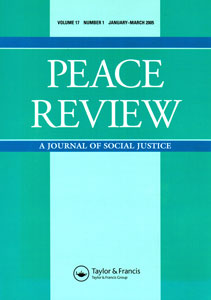
SHEEHAN: Conflict Transformation as Counterinsurgency | Peace Review: A Journal of Social Justice | March 2014

Posted in 9-11, afghanistan, analysis, baghdad, college of public affairs, conflict resolution, conflict transformation, congress, council on foreign relations, counterinsurgency, counterterrorism, courses, data, databases, democracy, diplomacy, education, evidence-based, foreign policy, foreign policy analysis, framing, global, human rights, human security, international relations, international security studies, international studies association, iraq, ISA, media, middle east, militarization, military, obama, peace, peace and conflict studies, peace review, peacebuilding, pedagogy, petraeus, policy, politics, research, scholarly, securitization, security studies, sheehan, social science, soldier, stability operations, state department, teaching, terrorism, transformation of war, university of baltimore, war on March 17, 2014 by Professor Sheehan

#About / #Media / #News / #Scholarship / #Inquiries

SHEEHAN: Conflict Transformation as Counterinsurgency | Peace Review: A Journal of Social Justice | March 2014

Peace Review: A Journal of Social Justice, 26:121–128; Copyright © Taylor & Francis Group, LLC; ISSN 1040-2659 print; 1469-9982; Online DOI: 10.1080/10402659.2014.876327

Dr. Ivan Sascha Sheehan is published in the March 2014 edition of Peace Review: A Journal of Social Justice. Dr. Sheehan’s latest study — Conflict Transformation as Counterinsurgency — is an empirical examination of the increasing usage of conflict transformation concepts in the context of counterinsurgency doctrine. Peace Review is a peer-reviewed journal published by Taylor and Francis Group, LLC/ Routledge that addresses current issues and controversies that underlie the promotion of a more peaceful world.

Excerpt | Conflict Transformation as Counterinsurgency | Peace Review: A Journal of Social Justice | March 2014

…By October of 2008, Colonel Patrick Kelleher, in a report submitted to the Joint Military Operations Department at the Naval War College, had proposed that conflict transformation be embraced wholesale by the U.S. government as the primary framework and a “paradigm” for “Security, Stability, Transition and Reconstruction Operations (SSTR)” in what was now being called the “Long War” against insurgency. Borrowing from Lederach the importance of implementing a process to achieve “sustainable results” and from other influential work by Miall, Ramsbotham, and Woodhouse, he addressed the need to achieve transformation at five levels: “context transformation,” “structural transformation,” “actor transformation,” “issue transformation,” and “personal and group transformation.” But at each level, although he used the language of conflict transformation (paying attention to “basic human needs” and “empowering civil society”), he cast its intent in clearly utilitarian and prescriptive terms, such as to “win the peace,” “to establish a new domestic order,” and “to further U.S. objectives.”

Retrieve in #PDF Format – SHEEHAN: Conflict Transformation as Counterinsurgency | Peace Review: A Journal of Social Justice | March 2014

 #About / #News / #Scholarship /