Archive for NCRI

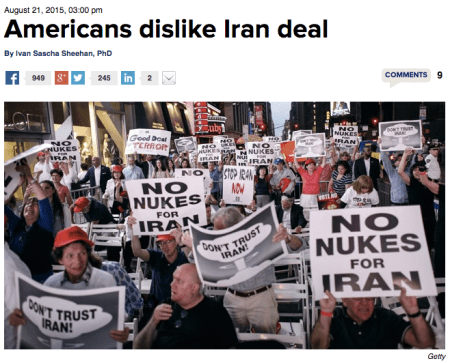
SHEEHAN: Americans Dislike Iran Deal | The Hill | Policy Commentary

Posted in @TheIranDeal, advisory board, analysis, arak, assad, baghdad, ballistic missiles, bipartisan, CIA, civil unrest, congress, congressional oversight, counterterrorism, covert, democracy, democrat, deterrence, diplomacy, dissident, Dr. Ivan Sascha Sheehan, fordow, foreign policy, foreign policy analysis, freedom, fundamentalism, ginsberg, haider al-abadi, House Foreign Affairs Subcommittee on Terrorism and Non-Proliferation, human rights, human security, IAEA, inspections, intelligence, international relations, iran, iraq, irgc, ISIS, israel, Ivan Sascha Sheehan, kerry, leadership, media, MEK, MI6, middle east, militarization, military, mossad, natanz, NCRI, negotiation, netanyahu, nuclear, obama, P5+1, parchin, paris, PMOI, policy, political science, politics, polls, preemptive, Professor Ivan Sascha Sheehan, protest, qum, regime change, regime change from within, republican, research, rouhani, sanctions, sectarian conflict, security studies, senate, senate foreign relations committee, sheehan, state department, survey, syria, tehran, terrorism, the hill, threat, u.s. foundation for liberty, united nations, unrest, war, warships, weapons, white house, yemen, zarif with tags , , , , , , , , , , , , , , , , , , , on August 21, 2015 by Professor Sheehan

#Media / #News / #Scholarship / #Inquiries / #UB

SHEEHAN: Americans Dislike Iran Deal | The Hill | Commentary | 21 Aug 2015 | Print #PDF

Dr. Ivan Sascha Sheehan, Associate Professor of Public and International Affairs, discusses congressional oversight of the Joint Comprehensive Plan of Action in the context of the increasingly unpopular nature of the accord and offers specific policy recommendations to Congress as new polls suggest that the more Americans learn about the agreement, the more they dislike it.

Sheehan has written and spoken widely over the past fews weeks on matters related to U.S. foreign policy with Iran, including:

TANTER & SHEEHAN: The Iran Deal Needs Bipartisanship | Foreign Policy | 15 Aug 2015

PRESS RELEASE: Iran Nuclear Deal & Congressional OversightNational Press Club | 4 Aug 2015

SHEEHAN & TANTER: Six Reasons Congress Should Reject the Iran Nuclear Deal | Townhall | 5 Aug 2015

SHEEHAN: Reject the Nuclear Deal in Favor of Regime Change from Within | The Hill | 30 Jul 2015

PRESS CONFERENCE: Iranian Nuclear Ambitions, The Agreement, Human Rights Violations | 21 Jul 2015

For additional research or media related updates or to learn more about Dr. Sheehan, follow him on Twitter @ProfSheehan or link to his research profiles.

The Hill___

#About / #News / #Scholarship /

SHEEHAN: National Press Club | Iran Nuclear Deal & Congressional Oversight | 4 Aug 2015

Posted in analysis, arak, ashraf, assad, baghdad, ballistic missiles, bipartisan, briefing, c-span, camp liberty, chemical weapons, CIA, civil unrest, clinton, college of public affairs, congress, congressional oversight, council on foreign relations, counterterrorism, covert, crimes against humanity, debate, delisting, democracy, democrat, deterrence, diplomacy, dissident, Dr. Ivan Sascha Sheehan, education, european union, evidence-based, farsi, fordow, foreign policy, foreign policy analysis, Fox, freedom, fundamentalism, global, haider al-abadi, House Foreign Affairs Subcommittee on Terrorism and Non-Proliferation, human rights, human security, IAEA, inspections, intelligence, international relations, international security studies, iran, iran policy committee, iraq, irgc, ISIS, israel, Ivan Sascha Sheehan, kerry, leadership, media, MI6, middle east, militarization, military, mossad, natanz, national press club, NCRI, negotiation, netanyahu, nppp.org, nuclear, nuclear proliferation prevention project, nyt, obama, P5+1, parchin, paris, PMOI, policy, political science, politics, preemptive, presidential election, prof. alan kuperman, prof. raymond tanter, Professor Ivan Sascha Sheehan, protest, qum, regime change, regime change from within, republican, research, rouhani, sanctions, scholarly, sectarian conflict, securitization, security studies, senate, senate foreign relations committee, sheehan, shiite, state department, sunni, syria, tanter, teaching, tehran, terror tagging, terrorism, the hill, the washington post, threat, united nations, university of baltimore, unrest, war, warships, weapons, white house, wsj, yemen, zarif with tags , , , , , , , , , , , , , , , , , , , , , , , , , , , , on August 6, 2015 by Professor Sheehan

#Media / #News / #Scholarship / #Inquiries / #UB

PRESS RELEASE: Iran Nuclear Deal & Congressional Oversight | National Press Club | Washington, D.C. | 4 Aug 2015

Note: Dr. Sheehan’s remarks run from ~ minute 27 – 50. 

Dr. Ivan Sascha Sheehan, Associate Professor of Public and International Affairs, spoke at the National Press Club on August 4, 2015. Sheehan touched on topics related to congressional oversight of the Joint Comprehensive Plan of Action with Iran, the Iran Nuclear Agreement Review Act of 2015, scenario likelihood, contingency planning, and the options available to policymakers not satisfied with the choice between war and diplomacy.

Speakers:

Prof. Alan J. Kuperman, Associate Professor, LBJ School of Public Affairs, University of Texas at Austin, coordinates the Nuclear Proliferation Prevention Project.

Prof. Ivan Sascha Sheehan, Associate Professor & Graduate Program Director, School of Public and International Affairs, University of Baltimore.

Chair, Moderator, and Commentator:

Emeritus Prof. Raymond Tanter, University of Michigan, is President of Iran Policy Committee Publishing and former member of the National Security Council staff and Representative of the Secretary of Defense to arms control talks.

Iran Policy Committee Publishing Nuclear Proliferation Prevention Project (NPPP.org)

*Official Press Release*

 #About / #News / #Scholarship /

SHEEHAN & TANTER: Six Reasons Congress Should Reject the Iran Deal | Townhall | Policy

Posted in analysis, arak, assad, baghdad, ballistic missiles, bipartisan, CIA, congress, congressional oversight, counterterrorism, covert, debate, democracy, democrat, deterrence, diplomacy, dissident, Dr. Ivan Sascha Sheehan, education, fordow, foreign policy, foreign policy analysis, freedom, fundamentalism, global, haider al-abadi, House Foreign Affairs Subcommittee on Terrorism and Non-Proliferation, human rights, human security, IAEA, inspections, intelligence, international relations, international security studies, iran, iran policy committee, iraq, irgc, ISIS, israel, Ivan Sascha Sheehan, kerry, leadership, media, middle east, militarization, military, natanz, national press club, NCRI, negotiation, netanyahu, nuclear, obama, P5+1, parchin, paris, PMOI, policy, politics, preemptive, prof. alan kuperman, prof. raymond tanter, Professor Ivan Sascha Sheehan, protest, regime change, regime change from within, republican, research, rouhani, sanctions, scholarly, securitization, security studies, senate, senate foreign relations committee, sheehan, shiite, state department, sunni, syria, tanter, teaching, tehran, terror tagging, terrorism, threat, u.s. foundation for liberty, unrest, war, warships, weapons, white house, yemen, zarif with tags , , , , , , , , , , , , , , , , , , , , , , on August 5, 2015 by Professor Sheehan

#Media / #News / #Scholarship / #Inquiries / #UB

SHEEHAN & TANTER: Six Reasons Congress Should Reject the Iran Nuclear Deal | Townhall | Policy Commentary | Print #PDF

Dr. Ivan Sascha Sheehan, Associate Professor of Public and International Affairs, is joined by former National Security Council Senior Staff member and Emeritus Professor Dr. Raymond Tanter at Townhall on why Congress should be concerned with the porous nature of the Joint Comprehensive Plan of Action with Iran.

The policy-oriented commentary extends remarks they delivered at the National Press Club in Washington, D.C.

Sheehan

Also Read — SHEEHAN: Reject the Nuclear Deal in Favor of Regime Change from Within | The Hill

Prof. Ivan Sascha Sheehan, Associate Professor of Public and International Affairs at the University of Baltimore, directs graduate programs in Negotiations and Conflict Management/ Global Affairs and Human Security. The author of several critiques of preemptive force, Sheehan writes and speaks on matters pertinent to congressional oversight of the Iran deal, including regime change from within, and the main Iranian opposition to a nuclear-armed Iran.

Emeritus Prof. Raymond Tanter, University of Michigan, is President of Iran Policy Committee Publishing and former member of the National Security Council staff and Representative of the Secretary of Defense to arms control talks. Tanter writings include Arab Rebels and Iranian Dissidents, Iran’s Breakout and Sneakout, and Appeasing the Ayatollahs and Suppressing Democracy.

For additional research or media related updates or to learn more about Dr. Sheehan, follow him on Twitter @ProfSheehan or link to his research profiles.

Follow Dr. Tanter @IPCPublishing and Pundicity.

 #About / #News / #Scholarship /

SHEEHAN: What Is “Regime Change From Within?” Unpacking the Concept in the Context of Iran | Digest of Middle East Studies | Oct 14

Posted in analysis, arak, ashraf, assad, baghdad, ballistic missiles, camp liberty, CIA, civil unrest, clinton, college of public affairs, congress, council on foreign relations, counterterrorism, covert, crimes against humanity, data, debate, delisting, democracy, deterrence, digest of middle east studies, diplomacy, dissident, DOMES, education, european union, evidence-based, farsi, fordow, foreign policy, foreign policy analysis, framing, freedom, fundamentalism, geneva, global, haider al-abadi, hostages, human rights, human security, IAEA, intelligence, international relations, international security studies, international studies association, iran, iran policy committee, iraq, irgc, ISA, ISIS, israel, kerry, kurd, maliki, media, MEK, MI6, middle east, middle east dialogue, military, mossad, natanz, NCRI, negotiation, netanyahu, nuclear, obama, P5+1, paris, PMOI, policy, policy studies organization, politics, preemptive, prof. ali ansari, prof. raymond tanter, protest, qum, quoted, rajavi, regime change, regime change from within, research, rouhani, sanctions, scholarly, sectarian conflict, security studies, senate, senate foreign relations committee, sheehan, shiite, social science, state department, strike, sunni, syria, tanter, tehran, terror tagging, terrorism, the hill, think-tank, threat, turkey, u.s. foundation for liberty, university of baltimore, unrest, war, weapons, white house, wocmes, zarif with tags , , , , , , , , , , , on October 29, 2014 by Professor Sheehan

#Media / #News / #Scholarship / #Inquiries / #UB

SHEEHAN: What Is “Regime Change From Within?” Unpacking the Concept in the Context of Iran | Digest of Middle East Studies | Fall 2014 | Vol. 23, Issue 2

Digest of Middle East Studies (DOMES); Copyright © Wiley / Policy Studies Organization; Fall 2014; Vol. 23, Issue 2; Pgs. 385-403

Dr. Ivan Sascha Sheehan is published in the fall 2014 issue of the Digest of Middle East Studies, a peer-reviewed journal published by Wiley-Blackwell on behalf of the Policy Studies Organization. Dr. Sheehan’s latest study — What Is “Regime Change From Within?” Unpacking the Concept in the Context of Iran — clarifies the contested concept of regime change from within via Tehran’s organized opposition and makes contributions to the concept’s formation to increase its policy relevance and classificatory significance.

Abstract: The use of the phrase “regime change from within” has surged in recent years in media, policy, and opposition discourse, especially in relation to the Islamic Republic of Iran. But what does “regime change from within” actually mean? Is it just a script to encourage the aspirations of a people, or can it be defined with more specificity? This article argues that to be of value as a concept and the basis for articulate policy, “regime change from within” needs to be better defined. To bring greater clarity to the term, the article tries to unpack the concept by disaggregating it into three analytically separable problem components: the “regime,” “change,” and “from within.” Drawing on the case of Iran, I argue that although most of the current debate around the concept is on the “from within” component, the definitional choices that need more discussion are the “regime” and “change” aspects of the phrase.

Excerpt | What Is “Regime Change From Within?” Unpacking the Concept in the Context of Iran | Digest of Middle East Studies | F.14 | Vol. 23, Issue 2 –

[The concept of] ‘regime change from within’ has been employed for an array of very disparate processes — as a holder for democracy promotion efforts from outside a country as well as indigenous efforts that exclude outside intervention, to highlight the need for radical change and more vaguely to call for continuous reform. But to be of value as a concept and the basis for articulate policy, a term needs to have some degree of specificity of meaning, some shared consensus. Otherwise, it just becomes a proverbial “you know it when you see it” concept that is difficult to distinguish from other types of political phenomena.

To address this gap and bring greater clarity to the concept, this article looks at some of the definitional choices that need to be addressed to come to a consensus on the meaning of “regime change from within.” Using the case of the Islamic Republic of Iran, I show how different decisions about what constitutes “regime change from within” could lead to very different conceptualizations in empirical cases…

 #About / #News / #Scholarship /