Archive for the think-tank Category

SHEEHAN: An Opportunity to Focus on Human Rights in Iran | Al Jazeera | Op-Ed

Posted in @AJEnglish, @TheIranDeal, advisory board, Al Jazeera, al jazeera english, analysis, arak, ashraf, assad, baghdad, ballistic missiles, bipartisan, camp liberty, chemical weapons, china, CIA, civil unrest, clinton, college of public affairs, congress, congressional oversight, counterterrorism, covert, crimes against humanity, democracy, democrat, deterrence, diplomacy, dissident, Dr. Ivan Sascha Sheehan, education, european union, evidence-based, farsi, fordow, foreign policy, foreign policy analysis, freedom, fundamentalism, geneva, global, gulf cooperation council, haider al-abadi, hostages, House Foreign Affairs Subcommittee on Terrorism and Non-Proliferation, human rights, human security, IAEA, inspections, intelligence, international relations, international security studies, iran, iraq, irgc, ISIS, Ivan Sascha Sheehan, kerry, leadership, media, MEK, MI6, middle east, mossad, natanz, NCRI, negotiation, nonproliferation, nuclear, obama, P5+1, parchin, paris, PMOI, policy, political science, politics, preemptive, presidential election, Professor Ivan Sascha Sheehan, protest, regime change, regime change from within, republican, research, rouhani, sanctions, sectarian conflict, security studies, senate, senate foreign relations committee, sheehan, shiite, state department, sunni, syria, tehran, terror tagging, terrorism, think-tank, threat, U.N. General Assembly, u.s. foundation for liberty, united nations, unrest, war, weapons, white house, yemen, zarif with tags , , , , , , , , , , , , , , , , , , , , , , , , , , on September 28, 2015 by Professor Sheehan

#Media / #News / #Scholarship / #Inquiries / #UB
SHEEHAN: An Opportunity to Focus on Human Rights in Iran | Al Jazeera | Op-Ed | 28 Sept 2015 | Print #PDF

As the United Nations General Assembly gets underway, Dr. Ivan Sascha Sheehan, Associate Professor of Public and International Affairs, weighs in at Al Jazeera on the human rights situation in Iran and the unique opportunity before world leaders.

Excerpts:

“The Iranian regime continues to execute its citizens at a higher rate than any U.N. member state. In fact the regime boasts the highest rate of executions per capita in the world, surpassing even China. More than two thousand have been executed on President Hassan Rouhani’s watch in just two years, more than in any similar period in the past twenty-five years.

Robert Kagan of the Brookings Institution makes the case that regime change in Teheran is the “best nonproliferation policy.” But regime change from within may also be the best strategy to uphold human rights.

U.S. President Barack Obama makes a mistake by treating Tehran as a fixture of the Middle East landscape but other U.S. officials need not make the same mistake. International law does not simply guarantee sovereignty. It upholds human rights. States are instruments of and by the people, not the other way around.”

Dr. Sheehan is the Director of the graduate programs in Negotiations & Conflict Management and Global Affairs & Human Security in the College of Public Affairs at the University of Baltimore.

For additional research or media related updates or to learn more about Dr. Sheehan, follow him on Twitter @ProfSheehan or link to his research profiles.

#About / #News / #Scholarship /

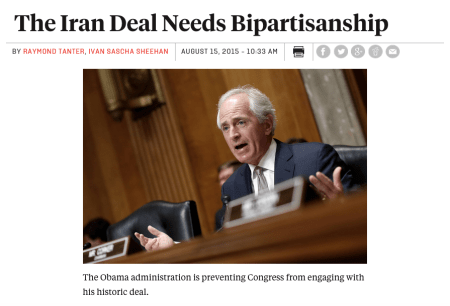
TANTER & SHEEHAN: The Iran Deal Needs Bipartisanship | Foreign Policy | Commentary

Posted in @TheIranDeal, american political science association, analysis, APSA, arak, assad, baghdad, ballistic missiles, bipartisan, CIA, clinton, college of public affairs, congress, congressional oversight, council on foreign relations, counterterrorism, debate, democracy, democrat, deterrence, diplomacy, Dr. Ivan Sascha Sheehan, fordow, foreign policy, foreign policy analysis, ForeignPolicy.com, Fox, freedom, fundamentalism, haider al-abadi, House Foreign Affairs Subcommittee on Terrorism and Non-Proliferation, human rights, human security, IAEA, inspections, intelligence, international relations, international security studies, international studies association, iran, iran policy committee, iraq, irgc, ISIS, israel, Ivan Sascha Sheehan, James Woolsey, kerry, leadership, media, middle east, military, negotiation, netanyahu, nuclear, nyt, obama, P5+1, parchin, policy, political science, politics, preemptive, prof. raymond tanter, Professor Ivan Sascha Sheehan, qum, regime change, regime change from within, republican, rouhani, sanctions, scholarly, sectarian conflict, security studies, senate, senate foreign relations committee, sheehan, shiite, state department, strike, sunni, syria, tanter, tehran, terrorism, the hill, the washington post, think-tank, threat, Tom Ridge, war, weapons, white house, yemen, zakaria, zarif with tags , , , , , , , , , , , , , , , , , , , , on August 15, 2015 by Professor Sheehan

#Media / #News / #Scholarship / #Inquiries / #UBTANTER & SHEEHAN: The Iran Deal Needs Bipartisanship | Foreign Policy | Commentary |15 Aug 2015 | Print #PDF

Dr. Ivan Sascha Sheehan, Associate Professor of Public and International Affairs, and Dr. Raymond Tanter, Emeritus Professor of Political Science and former National Security Council Staff in the Reagan-Bush administration, take to the pages of Foreign Policy to issue a call for bipartisanship in the context of congressional oversight of the Joint Comprehensive Plan of Action with Iran.

Foreign Policy was founded in 1970 by prominent Harvard University professor of political science, Samuel Huntington, to give a voice to alternative views about American foreign policy at the time of the Vietnam War.

Since this time it has grown into one of the leading foreign policy magazines in the world with a readership of millions:

“Over the course of almost half a century of award-winning journalism, design, and the presentation of important new ideas from the world’s leading thinkers, Foreign Policy has established itself at the forefront of media organizations devoted to the coverage of global affairs. Through Foreign Policy Magazine, our website ForeignPolicy.com, and FP Events, the FP Group reaches an international audience of millions and has become a trusted source of insight and analysis for leaders from government, business, finance, and the academic world.”

For additional research or media related updates or to learn more about Dr. Sheehan, follow him on Twitter @ProfSheehan or link to his research profiles. Follow Dr. Tanter @IPCPublishing and Pundicity.
___

#About / #News / #Scholarship /

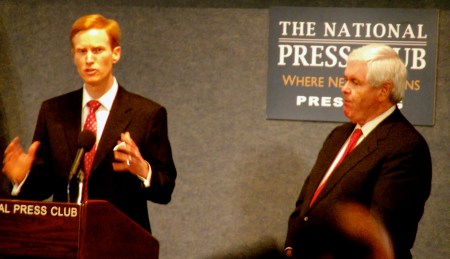
Sheehan to Speak at National Press Club

Posted in advisory board, analysis, arak, ashraf, assad, baghdad, ballistic missiles, bipartisan, briefing, c-span, camp liberty, chemical weapons, CIA, civil unrest, clinton, congress, congressional oversight, counterterrorism, covert, crimes against humanity, debate, delisting, democracy, democrat, deterrence, diplomacy, dissident, Dr. Ivan Sascha Sheehan, european union, farsi, fordow, foreign policy, foreign policy analysis, Fox, freedom, fundamentalism, geneva, global, gulf cooperation council, haider al-abadi, House Foreign Affairs Subcommittee on Terrorism and Non-Proliferation, human rights, human security, IAEA, inspections, intelligence, international relations, international security studies, interview, iran, iran policy committee, iraq, irgc, ISIS, israel, Ivan Sascha Sheehan, kerry, media, MEK, MI6, middle east, militarization, military, mossad, natanz, national press club, NCRI, negotiation, netanyahu, nuclear, nyt, obama, P5+1, parchin, paris, PMOI, policy, politics, preemptive, prof. alan kuperman, prof. raymond tanter, Professor Ivan Sascha Sheehan, protest, qum, quoted, rajavi, regime change, regime change from within, republican, research, rouhani, sanctions, scholarly, sectarian conflict, security studies, senate, senate foreign relations committee, sheehan, shiite, social media, state department, strike, sunni, syria, tanter, tehran, terror tagging, terrorism, the hill, the washington post, think-tank, threat, u.s. foundation for liberty, united nations, unrest, war, warships, weapons, white house, wsj, yemen, zarif with tags , , , , , , , , , , , , , , , , , , , , , , on August 2, 2015 by Professor Sheehan

#Media / #News / #Scholarship / #Inquiries / #UB

SHEEHANMEDIA / IMAGES / CONTACT

***

PRESS RELEASE: Iran Nuclear Deal & Congressional Oversight (Honoring the Legacy of Paul L. Leventhal) | National Press Club | Washington, D.C. | August 4, 2015

WASHINGTON, July 31, 2015 /PRNewswire-USNewswire/ — The following is being issued by the Iran Policy Committee Publishing and Nuclear Proliferation Prevention Project:

WHEN: 10:00am-11:00am, Tuesday, 4 August 2015

WHERE: Murrow Room, National Press Club, 529 14th St. NW, Wash. DC 20045

WHY: Nuclear talks with Iran touched off a fierce debate in Washington over the nature of the accord and its review by Congress. Honoring the legacy of Paul Leventhal, a pioneer of Congressional oversight of nuclear nonproliferation who later highlighted the threat of Islamist Iran and its pursuit of nuclear weapons, this panel will critically examine key aspects of the accord that Congress is to assess under the Iran Nuclear Agreement Review Act of 2015.

As a Senate aide, Leventhal organized hearings leading to the 1978 Nuclear Nonproliferation Act.  He then created the Nuclear Control Institute, and subsequently joined the board of the Iran Policy Committee, which Raymond Tanter heads, at its debut conference on 23 February 2005. After Leventhal’s passing in 2007, NCI’s papers were archived at the University of Texas, which established the Nuclear Proliferation Prevention Project and the Leventhal Fellowship.

The NPPP is coordinated by Prof. Alan J. Kuperman, who has written most recently on breakout and proliferation consequences of theIran deal.

Prof. Ivan Sascha Sheehan directs graduate programs in Negotiations and Conflict Management/ Global Affairs and Human Security. The author of several critiques of preemptive force, Sheehan writes and speaks on matters pertinent to congressional oversight of theIran deal, including regime change from within, the Iran threat, and the main Iranian opposition to a nuclear-armed Iran. Sheehan will assess future scenarios and contingencies for the congressional review.

Writings of Tanter include Arab Rebels and Iranian Dissidents, Iran’s Breakout and Sneakout, and Appeasing the Ayatollahs and Suppressing Democracy.

Speakers:

Prof. Alan J. Kuperman, Associate Professor, LBJ School of Public Affairs, University of Texas at Austin, coordinates the Nuclear Proliferation Prevention Project.

Prof. Ivan Sascha Sheehan, Associate Professor & Graduate Program Director, School of Public and International Affairs, University of Baltimore.

Chair, Moderator, and Commentator:

Emeritus Prof. Raymond Tanter, University of Michigan, is President of Iran Policy Committee Publishing and former member of the National Security Council staff and Representative of the Secretary of Defense to arms control talks.

CONTACTS:

RSVP to: Professor Raymond Tanter
Cc Professor Alan J. Kuperman
Cc Professor Ivan Sascha Sheehan

Iran Policy Committee Publishing Nuclear Proliferation Prevention Project (NPPP.org)

SOURCE: Iran Policy Committee Publishing and Nuclear Proliferation Prevention Project

*Official Press Release*

 #About / #News / #Scholarship /

SHEEHAN: What Is “Regime Change From Within?” Unpacking the Concept in the Context of Iran | Digest of Middle East Studies | Oct 14

Posted in analysis, arak, ashraf, assad, baghdad, ballistic missiles, camp liberty, CIA, civil unrest, clinton, college of public affairs, congress, council on foreign relations, counterterrorism, covert, crimes against humanity, data, debate, delisting, democracy, deterrence, digest of middle east studies, diplomacy, dissident, DOMES, education, european union, evidence-based, farsi, fordow, foreign policy, foreign policy analysis, framing, freedom, fundamentalism, geneva, global, haider al-abadi, hostages, human rights, human security, IAEA, intelligence, international relations, international security studies, international studies association, iran, iran policy committee, iraq, irgc, ISA, ISIS, israel, kerry, kurd, maliki, media, MEK, MI6, middle east, middle east dialogue, military, mossad, natanz, NCRI, negotiation, netanyahu, nuclear, obama, P5+1, paris, PMOI, policy, policy studies organization, politics, preemptive, prof. ali ansari, prof. raymond tanter, protest, qum, quoted, rajavi, regime change, regime change from within, research, rouhani, sanctions, scholarly, sectarian conflict, security studies, senate, senate foreign relations committee, sheehan, shiite, social science, state department, strike, sunni, syria, tanter, tehran, terror tagging, terrorism, the hill, think-tank, threat, turkey, u.s. foundation for liberty, university of baltimore, unrest, war, weapons, white house, wocmes, zarif with tags , , , , , , , , , , , on October 29, 2014 by Professor Sheehan

#Media / #News / #Scholarship / #Inquiries / #UB

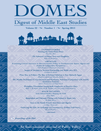
SHEEHAN: What Is “Regime Change From Within?” Unpacking the Concept in the Context of Iran | Digest of Middle East Studies | Fall 2014 | Vol. 23, Issue 2

Digest of Middle East Studies (DOMES); Copyright © Wiley / Policy Studies Organization; Fall 2014; Vol. 23, Issue 2; Pgs. 385-403

Dr. Ivan Sascha Sheehan is published in the fall 2014 issue of the Digest of Middle East Studies, a peer-reviewed journal published by Wiley-Blackwell on behalf of the Policy Studies Organization. Dr. Sheehan’s latest study — What Is “Regime Change From Within?” Unpacking the Concept in the Context of Iran — clarifies the contested concept of regime change from within via Tehran’s organized opposition and makes contributions to the concept’s formation to increase its policy relevance and classificatory significance.

Abstract: The use of the phrase “regime change from within” has surged in recent years in media, policy, and opposition discourse, especially in relation to the Islamic Republic of Iran. But what does “regime change from within” actually mean? Is it just a script to encourage the aspirations of a people, or can it be defined with more specificity? This article argues that to be of value as a concept and the basis for articulate policy, “regime change from within” needs to be better defined. To bring greater clarity to the term, the article tries to unpack the concept by disaggregating it into three analytically separable problem components: the “regime,” “change,” and “from within.” Drawing on the case of Iran, I argue that although most of the current debate around the concept is on the “from within” component, the definitional choices that need more discussion are the “regime” and “change” aspects of the phrase.

Excerpt | What Is “Regime Change From Within?” Unpacking the Concept in the Context of Iran | Digest of Middle East Studies | F.14 | Vol. 23, Issue 2 –

[The concept of] ‘regime change from within’ has been employed for an array of very disparate processes — as a holder for democracy promotion efforts from outside a country as well as indigenous efforts that exclude outside intervention, to highlight the need for radical change and more vaguely to call for continuous reform. But to be of value as a concept and the basis for articulate policy, a term needs to have some degree of specificity of meaning, some shared consensus. Otherwise, it just becomes a proverbial “you know it when you see it” concept that is difficult to distinguish from other types of political phenomena.

To address this gap and bring greater clarity to the concept, this article looks at some of the definitional choices that need to be addressed to come to a consensus on the meaning of “regime change from within.” Using the case of the Islamic Republic of Iran, I show how different decisions about what constitutes “regime change from within” could lead to very different conceptualizations in empirical cases…

 #About / #News / #Scholarship /

Sheehan to Present at 2014 Middle East Dialogue

Posted in analysis, assad, baghdad, CIA, clinton, college of public affairs, congress, counterterrorism, covert, delisting, democracy, deterrence, digest of middle east studies, diplomacy, dissident, DOMES, education, european union, evidence-based, foreign policy, foreign policy analysis, freedom, global, intelligence, international relations, international security studies, iran, iraq, kerry, maliki, media, MEK, MI6, middle east, middle east dialogue, military, NCRI, nuclear, obama, P5+1, paris, peace, PMOI, policy, policy studies organization, politics, preemptive, protest, rajavi, regime change, research, sanctions, scholarly, security studies, senate, senate foreign relations committee, sheehan, state department, strike, tehran, terrorism, think-tank, threat, u.s. foundation for liberty, university of baltimore, unrest, war, weapons, white house on February 20, 2014 by Professor Sheehan

#About / #Media / #News / #Scholarship / #Inquiries

Dr. Ivan Sascha Sheehan has been invited to deliver a talk at the 2014 Middle East Dialogue hosted by the Policy Studies Organization on February 27. Dr. Sheehan’s talk titled Clarifying a Contested Concept: Regime Change from Within will trace the evolution of the concept of regime change from within and argue that meaningful policy demands more precise articulation of the term. The conference, held at the Whittemore House in Washington, D.C. will feature scholars and policy analysts that address the event’s 2014 theme of Strategies for Change in the Middle EastDr. Sheehan’s remarks at the 2013 Middle East Dialogue resulted in the publication of an article in the peer-reviewed journal, Digest of Middle East Studies.

Clarifying a Contested Concept: Regime Change from Within

The term “regime change from within” has become increasingly popular in opposition and policy discourse, especially in relation to the Islamic Republic of Iran. It has also begun entering the academic literature. But what does it mean? Despite its increasing use “regime change from within” is rarely defined and scant scholarly attention to date has been paid to defining it. This is problematic since, as an “umbrella concept,” the term can be stretched to include a wide variety of discrepant processes. In fact, “regime change from within” has been used as a holder for democracy promotion efforts within a country that start both inside and outside a country, as well as indigenous efforts that exclude outside support, to highlight the need for radical change, and more vaguely to call for “continuous” change or reform. This paper argues that coherent strategic policy demands better articulation of the meaning of the term. As a first step, the paper traces the evolution of use of the term “regime change from within,” tries to unpack its components, and develops a preliminary framework that partitions the concept into ends (vision) and means (strategy) to assess its utility for policy.

PSO/MED / Speaker Bios / Invitation

 #About / #News / #Scholarship /

Sheehan Article Featured on MSNBC

Posted in analysis, ashraf, assad, baghdad, CIA, clinton, congress, counterterrorism, crimes against humanity, democracy, diplomacy, dissident, foreign policy, foreign policy analysis, freedom, ginsberg, global, hostages, human rights, human security, intelligence, international relations, international security studies, iran, iraq, maliki, media, MEK, MI6, middle east, military, mossad, MSNBC, NCRI, negotiation, nuclear, obama, PMOI, policy, politics, rajavi, regime change, sanctions, security studies, sheehan, state department, strike, syria, tehran, terrorism, the hill, think-tank, threat, u.s. foundation for liberty, unrest, war, weapons, white house on November 4, 2013 by Professor Sheehan

An article by Dr. Ivan Sascha Sheehan was featured on MSNBC in advance of Iraqi Prime Minister Nouri al-Maliki’s visit to the White House on Nov. 1. The commentary was featured in an interview with Ambassador Marc Ginsberg, former U.S. Ambassador to Morocco., who described Maliki as part of the problem and not the solution. #Screenshot

#Media / #News / #Scholarship / #Inquiries

SHEEHAN: Use al-Maliki Visit to Send Iran a Clear Message – The Hill

 / #About / #InTheNews / #Scholarship

Sheehan Study on Iranian Opposition Published in Digest of Middle East Studies

Posted in analysis, APSA, CIA, clinton, college of public affairs, congress, council on foreign relations, counterterrorism, courses, covert, crimes against humanity, data, databases, debate, delisting, democracy, deterrence, digest of middle east studies, diplomacy, dissident, DOMES, education, european union, evidence-based, faculty fellow, foreign policy, foreign policy analysis, framing, freedom, global, human rights, human security, intelligence, international relations, international security studies, international studies association, iran, iran policy committee, iraq, ISA, maliki, media, MEK, MI6, middle east, middle east dialogue, military, NCRI, negotiation, nuclear, obama, paris, peace, PMOI, policy, policy studies organization, politics, preemptive, protest, rajavi, regime change, research, rhetoric, scholarly, security studies, sheehan, state department, syria, teaching, terrorism, think-tank, threat, toronto, u.s. foundation for liberty, university of baltimore, unrest, war on October 11, 2013 by Professor Sheehan

Digest of Middle East Studies (DOMES) / Wiley-Blackwell / Policy Studies OrganizationOnline ISSN: 1949-3606 / Fall 2013, Vol. 22, Issue 2

Challenging a Terrorist Tag in the Media: Framing the Politics of Resistance and an Iranian Opposition Group – Digest of Middle East Studies – Fall 2013 – Vol. 22, Issue 2

Dr. Ivan Sascha Sheehan is published in the latest edition of the Digest of Middle East Studies, a peer reviewed journal published by Wiley-Blackwell on behalf of the Policy Studies Organization. The journal is edited by Middle East scholar Professor Mohammed M. Aman of the University of Wisconsin-Milwaukee.

Study Abstract:

Scholars have shown that media framing has a powerful effect on citizen perception and policy debates. Research has provided less insight into the ability of marginalized actors to promote their preferred frames in the media in a dynamic political context. The efforts of an exiled Iranian opposition group to get its name removed from official terror lists in the US, UK and EU provides a valuable platform to examine this problem. Using content analysis, I explore how the group promoted its frames in the opinion sections of major world news publications over nine years (2003–2012). I then examine the extent to which journalists aligned to its frames, as opposed to rival official frames, over time in the larger arena of news. The results support research showing that by nurturing small opportunities, marginalized political actors can expand media capacity and influence, but these effects are mediated at least in part by critical or focusing events that make rival frames less salient. The study sheds light on the complex relationship between activists, the government and the media. It has implications for the ability of marginalized political actors to get their frames into public discourse. It also has implications for terror tagging and media coverage of other controversial issues.

 / #About / #InTheNews / #Scholarship

Sheehan Appointed as Faculty Fellow at Schaefer Center for Public Policy

Posted in analysis, college of public affairs, education, evidence-based, faculty fellow, policy, research, schaefer center, scholarly, sheehan, think-tank, university of baltimore on August 17, 2013 by Professor Sheehan

Dr. Ivan Sascha Sheehan, Director of the graduate programs in Negotiation and Conflict Management and Global Affairs and Human Security in the School of Public and International Affairs at the University of Baltimore, has been appointed as a Faculty Fellow at the William Donald Schaefer Center for Public Policy. The Schaefer Center is Maryland’s preeminent applied research and policy analysis center. Dr. Sheehan’s term will run through June of 2015.

 / #About / #InTheNews

Sheehan Participates in Think-Tank Roundtable

Posted in analysis, bloomfield, briefing, CIA, clinton, college of public affairs, congress, counterterrorism, covert, delisting, democracy, deterrence, diplomacy, dissident, evidence-based, foreign policy, framing, freedom, global, human rights, human security, intelligence, international relations, iran, iraq, israel, MEK, MI6, middle east, military, NCRI, nuclear, obama, PMOI, policy, politics, preemptive, presidential election, protest, rajavi, regime change, research, scholarly, sheehan, state department, stimson center, terrorism, think-tank, threat, u.s. foundation for liberty, university of baltimore on June 11, 2013 by Professor Sheehan

Dr. Ivan Sascha Sheehan will participate in a roundtable discussion with Ambassador Lincoln P. Bloomfield, Jr. at The Stimson Center in Washington, DC on June 13 to examine findings from a new study titled The Mujahedin-e Khalq (MEK): Shackled by a Twisted History. The invitation only discussion will include a group of former government officials and Iran experts who will look at how information and intelligence about the Iranian opposition led to assumptions and judgments that may have constrained policy formulation over time. The roundtable will also address how evolving policy doctrines on terrorism and human rights affect the case.