/ #About / #Media / #News / #Scholarship / #Inquiries
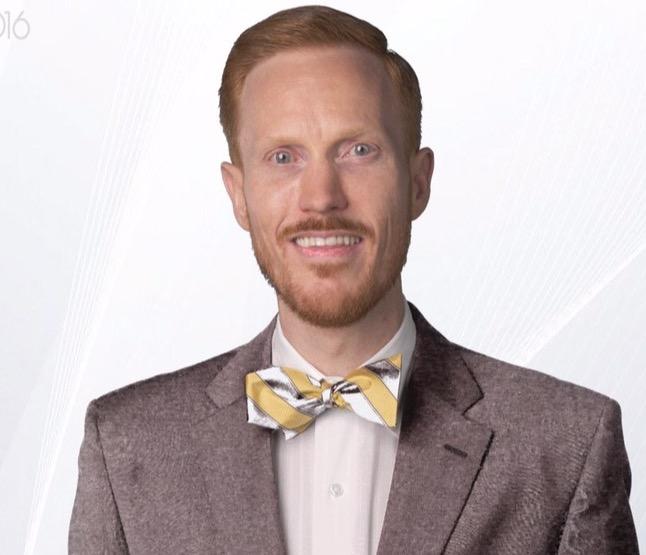
The segment featuring Dr. Ivan Sascha Sheehan begins at 00.45
UPDATE: 2/25 – See Farsi Translation
 / #About / #News / #Scholarship /
/ #About / #Media / #News / #Scholarship / #Inquiries
The segment featuring Dr. Ivan Sascha Sheehan begins at 00.45
UPDATE: 2/25 – See Farsi Translation
/ #About / #News / #Scholarship /
 / #About / #Media / #News / #Scholarship / #Inquiries
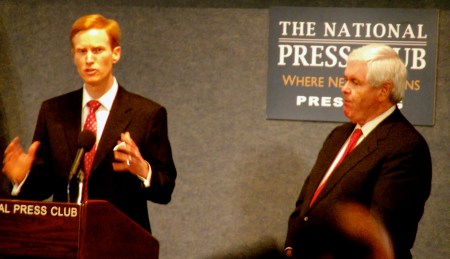
Dr. Ivan Sascha Sheehan has been invited to deliver a talk at the 2014 Middle East Dialogue hosted by the Policy Studies Organization on February 27. Dr. Sheehan’s talk titled Clarifying a Contested Concept: Regime Change from Within will trace the evolution of the concept of regime change from within and argue that meaningful policy demands more precise articulation of the term. The conference, held at the Whittemore House in Washington, D.C. will feature scholars and policy analysts that address the event’s 2014 theme of Strategies for Change in the Middle East. Dr. Sheehan’s remarks at the 2013 Middle East Dialogue resulted in the publication of an article in the peer-reviewed journal, Digest of Middle East Studies.
Clarifying a Contested Concept: Regime Change from Within
The term “regime change from within” has become increasingly popular in opposition and policy discourse, especially in relation to the Islamic Republic of Iran. It has also begun entering the academic literature. But what does it mean? Despite its increasing use “regime change from within” is rarely defined and scant scholarly attention to date has been paid to defining it. This is problematic since, as an “umbrella concept,” the term can be stretched to include a wide variety of discrepant processes. In fact, “regime change from within” has been used as a holder for democracy promotion efforts within a country that start both inside and outside a country, as well as indigenous efforts that exclude outside support, to highlight the need for radical change, and more vaguely to call for “continuous” change or reform. This paper argues that coherent strategic policy demands better articulation of the meaning of the term. As a first step, the paper traces the evolution of use of the term “regime change from within,” tries to unpack its components, and develops a preliminary framework that partitions the concept into ends (vision) and means (strategy) to assess its utility for policy.
PSO/MED / Speaker Bios / Invitation
/ #About / #News / #Scholarship /

 / #About / #Media / #News / #Scholarship / #Inquiries
SHEEHAN: Face the Facts on Iran Agreement | The Hill | Commentary
As world powers gather in Vienna to discuss a comprehensive agreement to curtail Tehran’s nuclear program, Dr. Ivan Sascha Sheehan is published in the The Hill on what Congress can do to correct White House missteps on Iran policy.
As the White House rolls the dice on a permanent pact and embraces the failed strategy of appeasement, Congress should place a check on the administration’s unwillingness to face the facts.
A nuclear compromise with Tehran will surrender the peace, not secure it. #PDF
UPDATE: 2/25 – This article was translated into Farsi and reprinted for a global audience. The policy recommendations were also featured Iranian National Television. Details soon.
/ #About / #News / #Scholarship /
 / #About / #Media / #News / #Scholarship / #Inquiries
SHEEHAN: Facing the Facts on the Iran Agreement | Townhall.com | Commentary
Dr. Ivan Sascha Sheehan is published at Townhall.com on February 11 on why Congress must pass the Nuclear Weapons Free Iran Act as well as protect the intelligence capabilities of the Iranian opposition detained in Iraq.
The U.S. policy of engagement with the Iranian regime at the expense of concerns raised by key allies – including Israel and Saudi Arabia – has chilled U.S. relations with global partners and strengthened Tehran’s hand in ongoing discussions with the five permanent members of the U.N. Security Council and Germany.
Iranian interpretations of the interim agreement have somehow preserved the domestic perks of the arrangement – including access to currency and the lifting of sanctions – while necessitating few of the actual obligations that would serve regional security interests.
Update: 2/26 – Syndicated in the Augusta Free Press
/ #About / #News / #Scholarship /
/ #About / #Media / #News / #Scholarship / #Inquiries
On February 10, Dr. Ivan Sascha Sheehan was interviewed on Baltimore’s FOX 45 on the threat posed by Iranian warships dispatched to the Atlantic Ocean just one week before P5+1 nuclear negotiations are set to resume in Vienna. You can view the segment at:
FOX Baltimore: Iran Says Warships Headed Close to US Borders
/ #About / #News / #Scholarship /
 / #About / #Media / #News / #Scholarship / #Inquiries
SHEEHAN: Stiffen the Penalties on Iranian Non-Compliance | The Hill | Commentary
Dr. Ivan Sascha Sheehan is published in the congressional newspaper The Hill on January 20 on the merits of the U.S. Senate enacting bipartisan legislation to address shortcomings in White House Iran policy.
Syria and Iraq are ablaze with bloody civil wars, Tehran is facilitating al Qaeda in Iraq’s foothold, and Shiite domination of political rivals has gone unchallenged.
Obama’s rhetorical goal of peacefully terminating Iran’s nuclear weapons program is admirable but negotiations without mechanisms to ensure verification are a fool’s endeavor and bargaining without extracting meaningful concessions is a rookie mistake.
The writer is director of the Negotiations and Conflict Management and Global Affairs and Human Security graduate programs in the College of Public Affairs at the University of Baltimore. #Image1 / #Image2 / #Image3
/ #About / #News / #Scholarship /

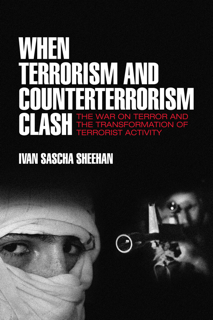

 Professor Sheehan is the Executive Director of the School of Public and International Affairs at the University of Baltimore where he teaches in the College of Public Affairs.









 @RSS Feed

 professorsheehan



You must be logged in to post a comment.